Robert Anthony Olexa, Ph.D.

Robert Anthony Olexa, Ph.D. ·

Associate Professor of General Education at the National Institute of Technology, Hakodate College (函館工業高等専門学校) — and Director of its XR Lab().

I study how sound, space and interaction shape language learning — building and testing VR/XR and AI-supported ways for students to actually use English, not just study it. My doctorate, completed at the Institute of Science Tokyo in 2026, asks what happens when a word’s sound, its meaning, and the virtual space around a learner are designed to fit together.

The road here ran from Anchorage, Alaska — where I co-founded a DIY art and show company before I ever taught a class — through classrooms in Korea and schools across Japan.

XR / Multimodal Learning Science CALL Human–AI Cultural Continuity

2026
Ph.D. Transdisciplinary Engineering (GEDES) · Institute of Science Tokyo
2017
M.S.Ed. TESOL · Temple University, Japan Campus
2009
B.A. Languages · University of Alaska Anchorage

researchmap · researchmap.jp/olexa ORCID · 0000-0002-9789-7912 XR Lab · lhako.com

Robert Anthony Olexa, Ph.D.

01 · Research

Sound, Space and Interaction

My work sits where language education meets the learning sciences: iconicity in learning design, VR-based English as a foreign language (EFL) learning, virtual study abroad and language contact, and classroom programs — extensive reading, quizzes, and role-play — that give learners repeated, meaningful contact with English. Methods include design-based research, preregistered experiments, mixed methods, and learner corpora.

Research funding

  • Apr 2021 – Mar 2024
    Co-Investigator, JSPS Grant-in-Aid for Scientific Research (C) KAKENHI 21K00778 — “Virtual Ryugaku: Measuring iconicity in VR in relation to language acquisition and cross-cultural communication.” PI: David Taquet. Role: study design and data collection for the VR study-abroad and iconicity strands; lead author of the resulting Discover Education article.

The dissertation and selected peer-reviewed articles are listed first in Papers. Selected programmes are shown as projects in Portfolio.

02 · Papers

Publications

In listed order, wording from the verified record

  1. Doctoral dissertation · 2026

    Olexa, R. A. (2026). Sound meets space: Iconicity as a design principle for virtual reality-based English as a foreign language learning [Doctoral dissertation, Institute of Science Tokyo].

  2. Peer-reviewed journal article · 2026

    Olexa, R. A., & Taquet, D. (2026). Virtual reality study abroad and language contact patterns in Japanese EFL learners. Discover Education, 5(1), 128.

  3. Peer-reviewed journal article · 2024

    Olexa, R. A., & Cross, J. S. (2024). Iconicity in VR: Experiences of language learning with commercial VR apps. International Journal in Information Technology in Governance, Education and Business, 6(2), 15–30.

  4. Peer-reviewed conference paper · 2022

    Carlon, M. K. J., Gonda, D. E., Andrews, E. M., Gayed, J. M., Olexa, R. A., & Cross, J. S. (2022). Educational nonlinear stories with Twine. In Proceedings of the Ninth ACM Conference on Learning @ Scale (L@S '22) (pp. 248–251). ACM.

  5. Peer-reviewed conference paper · 2020

    Olexa, R. A., & Librenjak, S. (2020). A microblog corpus using Tumblr for understanding Japanese university students' EFL writing. In JALT CALL 2019 Selected Papers (pp. 139–151). JALT CALL SIG.

  6. Other journal article / bulletin · 2022

    Okuzaki, M., & Olexa, R. (2022). Syllabus design of practical science in English based on Bloom's revised taxonomy. Journal of the Council of College English Teachers (COCET), 41, 55–64.

  7. Other journal article / bulletin · 2020

    Olexa, R. A. (2020). Introducing web-based English learning applications in the Japanese university classroom. Bulletin of International Pacific University, 15, 1–12.

  8. Other journal article / bulletin · 2018

    Olexa, R. A., & Walsh, A. (2018). Kids English program visits to a Japanese kindergarten: Intentions, expectations and results. Bulletin of International Pacific University, 12, 215–220.

  9. Professional publication · 2018

    Olexa, R. A. (2018). Grammar practice vs. consciousness raising tasks for teaching subjunctive verb mood. Temple University Japan Studies in Applied Linguistics, 114, 64–73.

  10. Professional publication · 2015

    Olexa, R. A. (2015). From zero to base: Developing an English immersion class for young learners. Temple University Japan Studies in Applied Linguistics, 99, 16–27.

  11. Professional publication · 2015

    Kinkade, J. T., Olexa, R. A., Peters, M., & Adam, S. (Eds.). (2015). Approaches to teaching young learners. Temple University Japan Studies in Applied Linguistics, 99.
In progress

These are not published. They are listed only so the record stays complete.

  • A Kōdan paper — revised and resubmitted, under review.
  • JALT CALL Trends (Castledown) — resubmission in progress.

03 · Portfolio

Projects

Selected programmes from studio and research work

01 · Delivery · XR Lab students

VR Camp 2026

Directed programme · student-authored worlds · ENGAGE platform · 25–27 Mar 2026

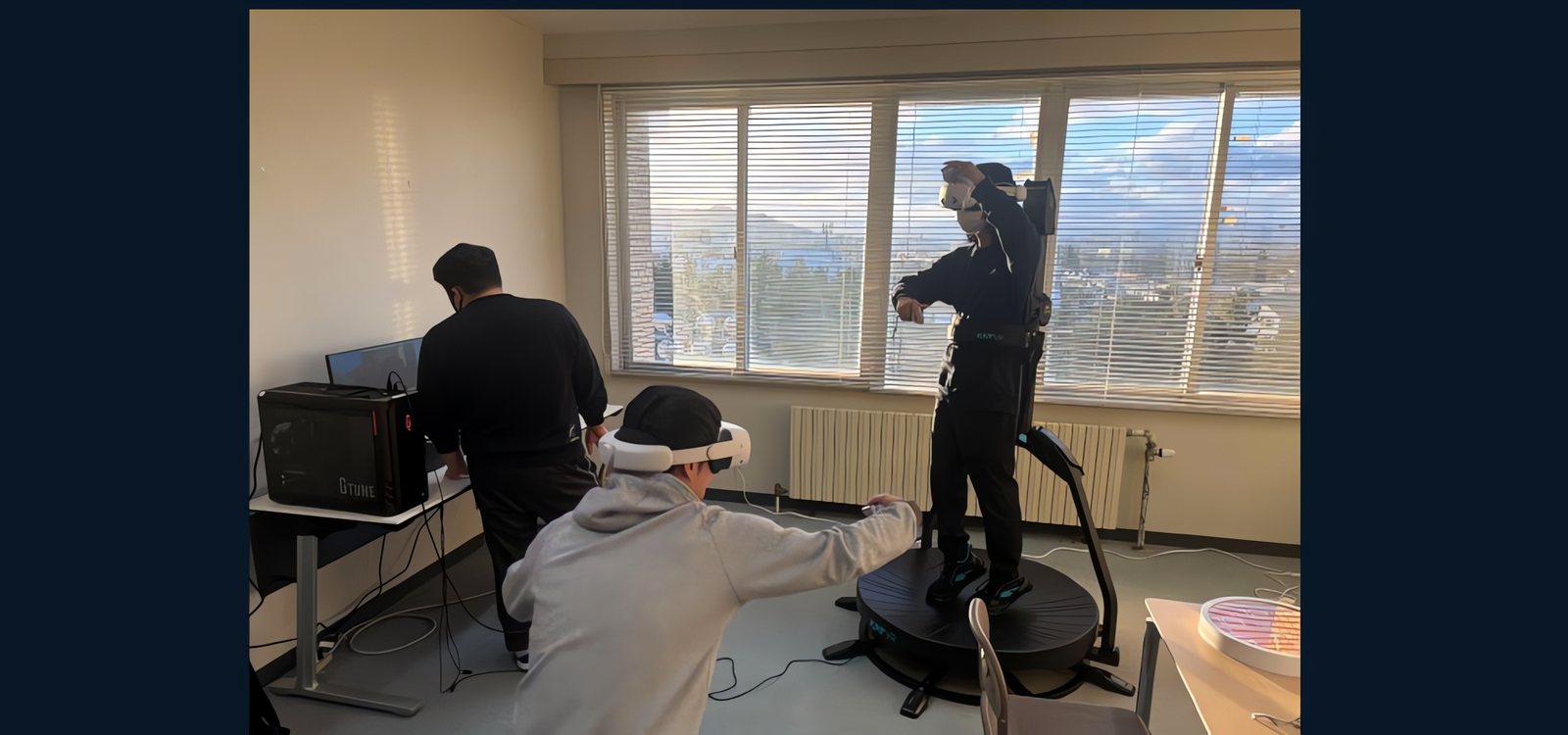
A student-led XR Lab programme directed so learners can create on existing software (ENGAGE). First major build: about 70 remote participants, three one-hour sessions, 25–27 March 2026. Eleven Electronics & ICT students work with Vision Pro, about 20 Quests, gaming PCs, 3D scanning, B-Haptic, and a VR treadmill. Students author; staff coach and direct the brief.

3×1h
Programme
70
Remote participants
PAR
Co-research
Students in the XR Lab at NIT Hakodate: one uses a headset on a VR treadmill, another wears a headset at floor level, and a third works at a desktop computer.
NIT Hakodate XR Lab — students working with headsets, a VR treadmill, and lab PCs.
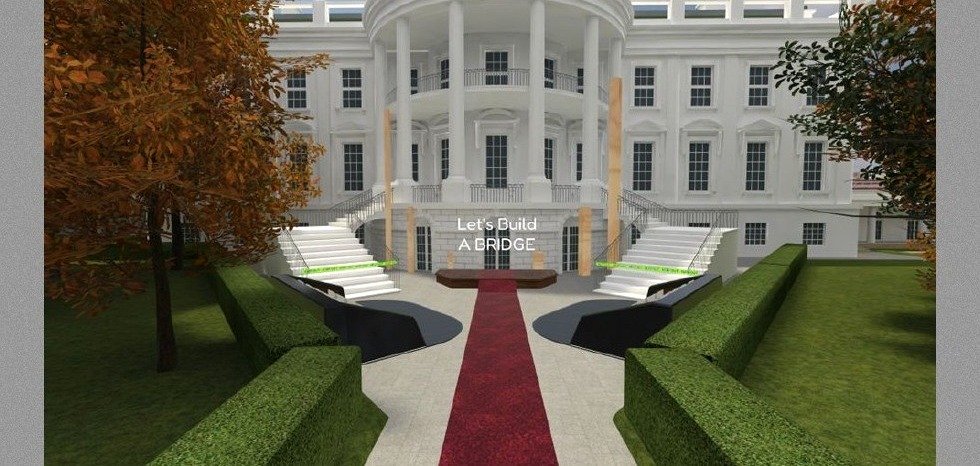
A shared ENGAGE world in front of a white mansion, with the on-screen prompt Let’s Build a Bridge.
Day 1 · Engineering
Build a Bridge

Civil-engineering task in shared ENGAGE space — materials, groups, a common goal.

Day 2 · Culture × AI
Storytelling Worlds

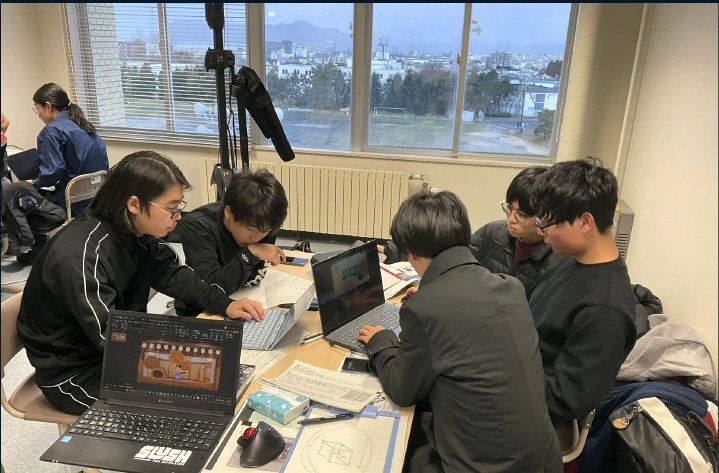
A rebuilt virtual theatre from the kōdan capture pipeline, staged for remote participants.

Five students gathered around laptops in the XR Lab, reviewing a 3D scene on screen.
Day 3 · Exchange
Studio Culture

Karaoke, dance, fireworks — designing, testing, and playing together.

02 · Access research

Virtual Study Abroad

Virtual ryugaku research · Discover Education 2026 · JSPS Co-Investigator

Language-contact patterns in VR versus physical exchange, and iconicity as a design lever for immersive language work — findings framed for teachers and designers. Lead and corresponding author of the 2026 Discover Education article; Co-Investigator on JSPS Grant-in-Aid (C) 21K00778 (2021–2024), with David Taquet as principal investigator. Related mixed-methods work on iconicity in commercial VR language apps (2024; 61 surveys, 9 interviews).

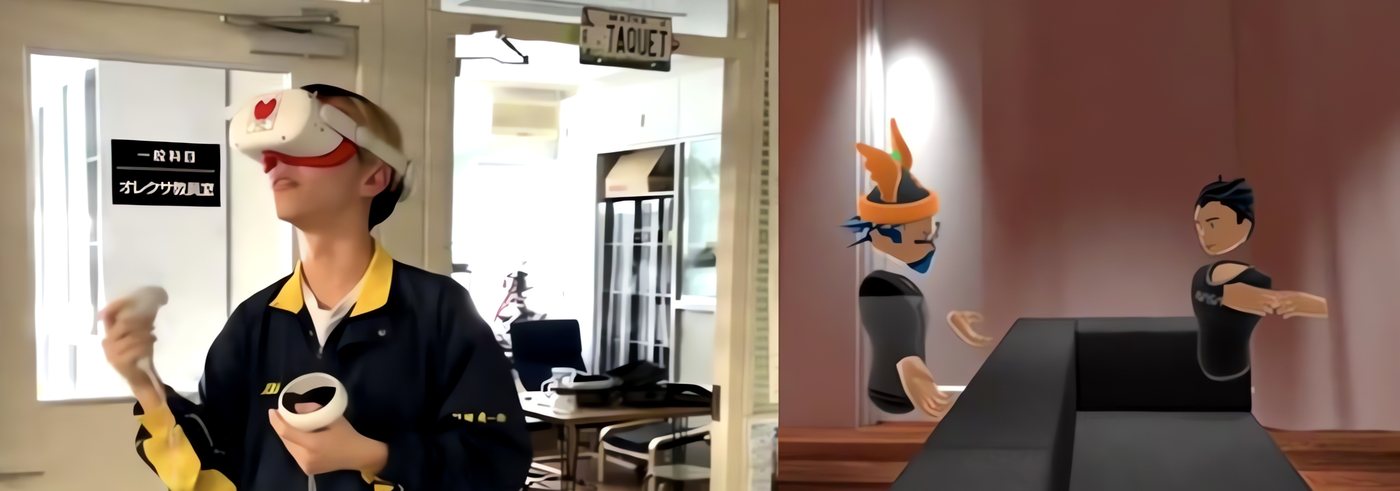
At left, a student in a school uniform wears a VR headset in a faculty office; at right, two avatars occupy a shared indoor virtual space.
Headset use beside a view of shared virtual contact.
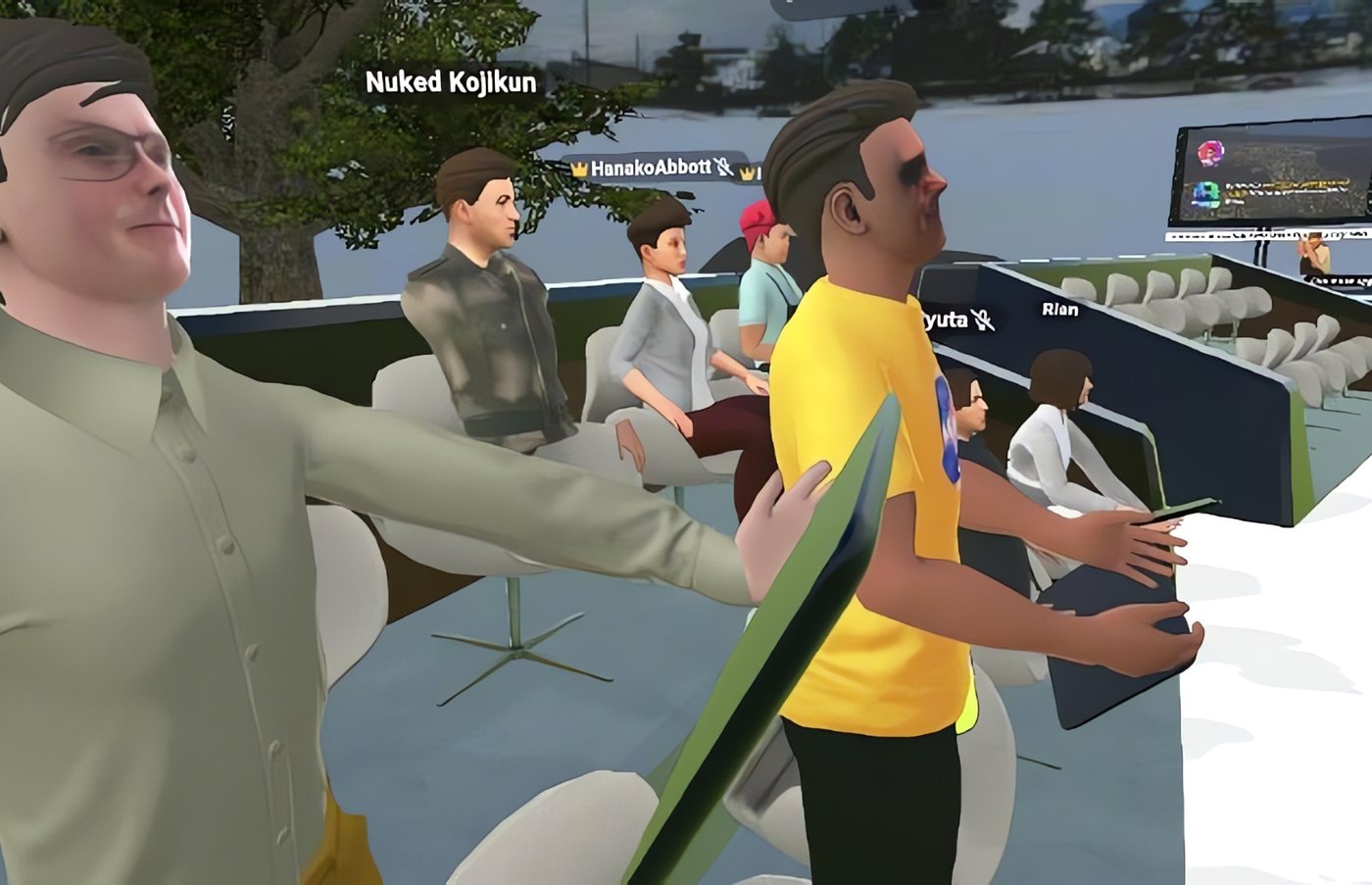
Avatars gathered in an outdoor virtual venue with seating and a large screen, a still from a social VR session.
A shared social VR space used for virtual exchange.

03 · Doctoral experiment

Sound Meets Space

Dissertation · Institute of Science Tokyo · conferred 22 September 2026 · preregistered

Holding instructional content constant, how does representational form (channel / spatial-visual design) affect learning outcomes for Japanese EFL learners — specifically sound recognition and related measures under a shared pancake-making lesson? Designed, directed, and analysed as primary investigator. Anapat Bunyapitaktamrong co-developed the Unity application. Existing speech tools supported data gathering. Same recorded word prompts, Foley sound effects, and speech pipeline across conditions; the principal manipulation was spatial-visual form. Preregistered. Local Whisper gathered speech and supported automated production analysis — near-floor for isolated accented words.

VR 20
Condition
2D 20
Condition
Text 20
Condition

One verified finding: a significant overall condition effect on sound-effect d′ (F(2,57)=3.36, p=.042); VR descriptively highest (VR 1.39, Text 1.05, 2D 0.85); no significant pairwise contrasts. Design implication: match outcome measures to the affordance tested; immersive grounding is not a uniform advantage across every task.

04 · Human–AI media · cultural continuity

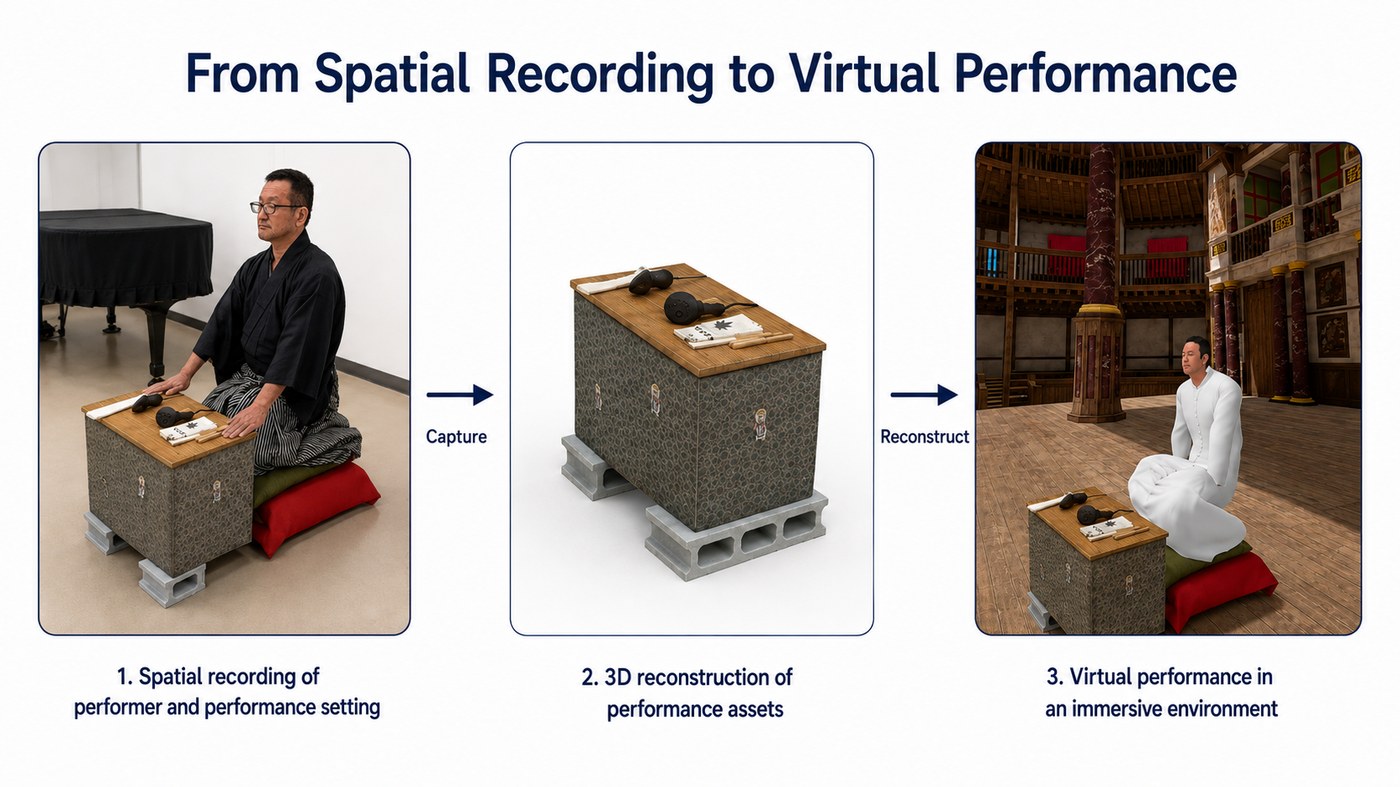
From Spatial Recording to Virtual Performance

Capture → Reconstruct → Virtual Performance · with Rie Shimokawa · JALT CALL 2026

A kōdan pipeline: a live performance recorded with Kinme Chikufutei, the performer and stage properties scanned (Polycam), rebuilt as a virtual theatre, and staged on Day 2 of VR Camp 2026 — directed with Rie Shimokawa (JALT CALL 2026), with AI speech-to-speech mediation for non-Japanese audiences. A paper on this work has been revised and resubmitted and is under review.

Three-step diagram titled From Spatial Recording to Virtual Performance: a live performer at a decorated wooden chest, a 3D reconstruction of the chest, and a virtual performer on a theatre stage.
Process graphic: spatial recording of the performer and setting; 3D reconstruction of performance assets; virtual performance in an immersive environment.
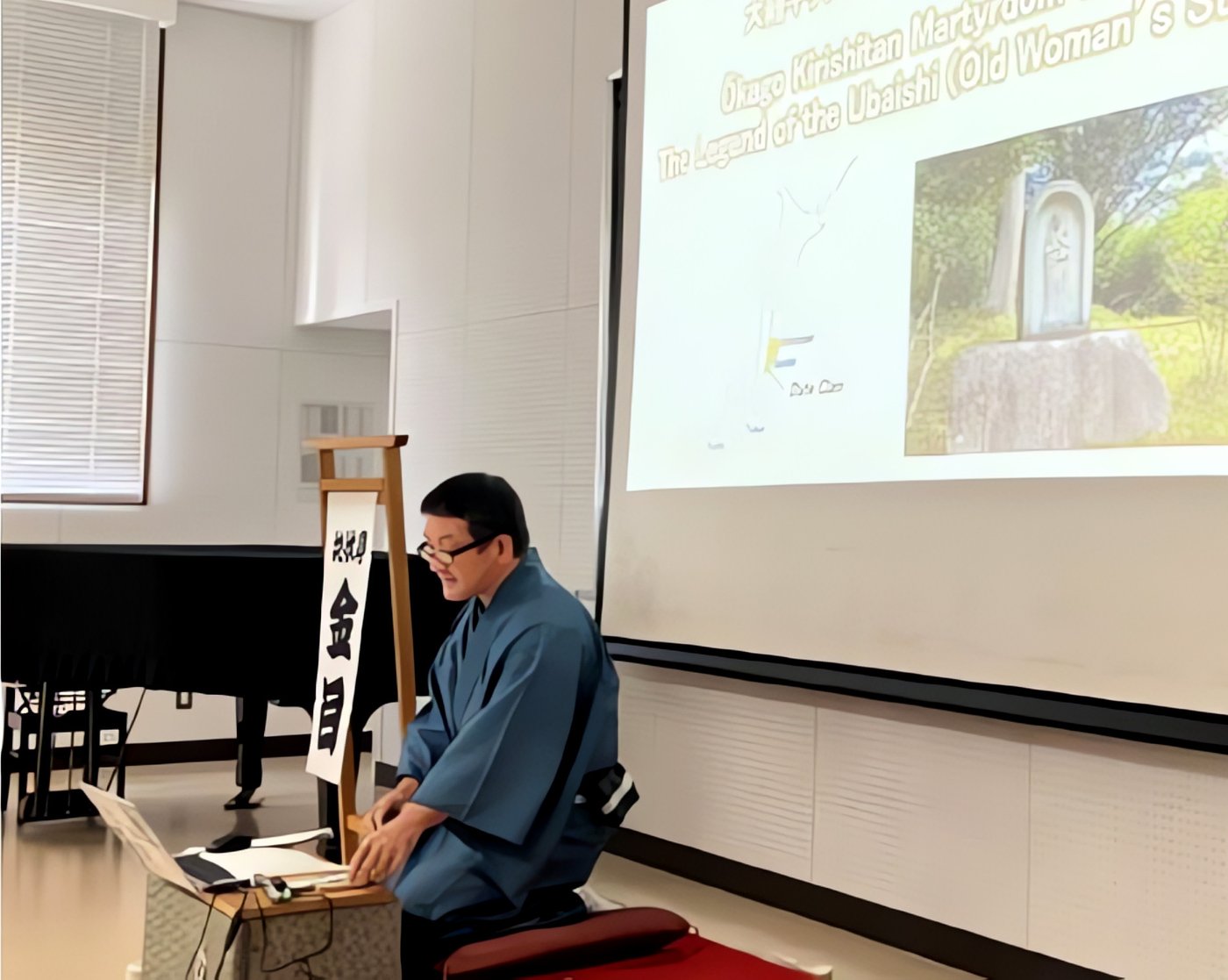
Kinme Chikufutei performing kōdan in a hall, seated at a wooden chest before a screen showing The Legend of the Ubaishi, with a calligraphed name plaque beside him.
Kinme Chikufutei, live kōdan performance.
A virtual theatre in ENGAGE: a scanned performer in white sits on a cushion on a wooden stage, with a chest of props in the foreground.
The rebuilt virtual theatre, staged for remote camp participants.

05 · Embodied practice · teacher programme

Bodyswaps

Commercial soft-skills VR · Teacher Journeys 2026 demonstration

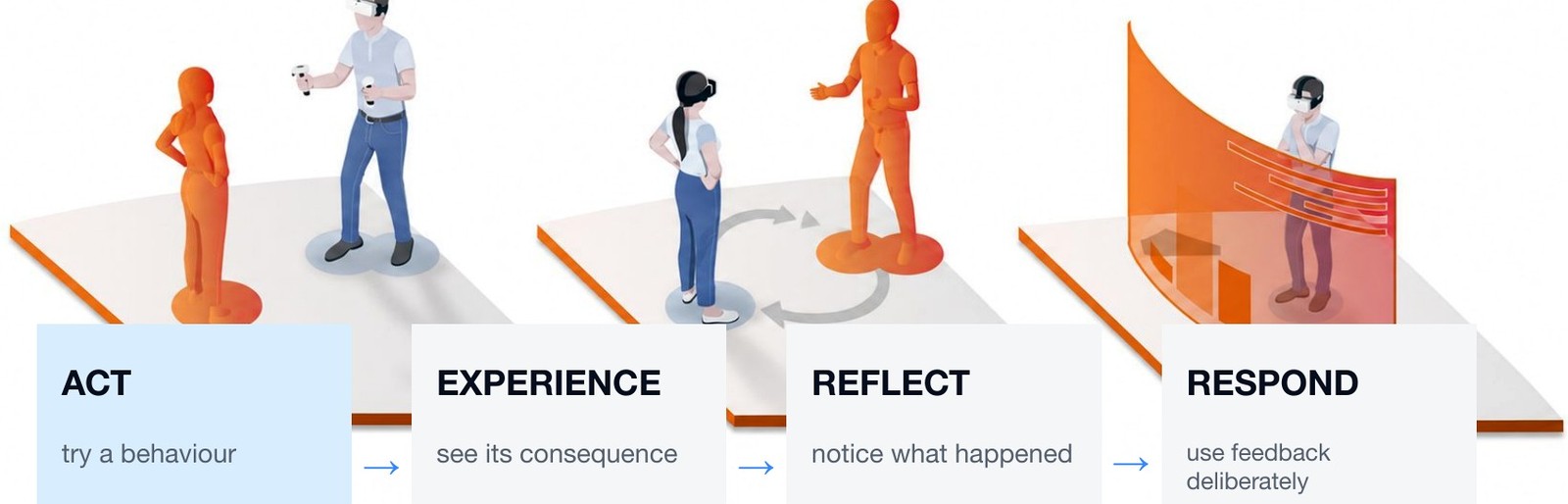
A teacher presentation / soft-skills demonstration using a commercial VR programme. The pedagogical loop is Act → Experience → Reflect → Respond: behaviour made visible, repeatable, and discussable — not headset novelty. Presented as a Teacher Journeys 2026 demonstration for teacher presentation practice, related to interest in enactment and embodiment for teacher development.

Four-step illustrated loop: Act, try a behaviour; Experience, see its consequence; Reflect, notice what happened; Respond, use feedback deliberately.
Act → Experience → Reflect → Respond, the pedagogical loop used in the demonstration.

04 · CV

Curriculum Vitae

Reverse chronological, from the verified record

Appointments

  • 2020 – present
    Associate Professor, General EducationNational Institute of Technology, Hakodate College, Japan(函館工業高等専門学校). Founder and Director, XR Lab (2020–). Deputy Director, Global Center (2024–).
  • 2017 – 2020
    Faculty member, Faculty of Education for Future GenerationsInternational Pacific University, Okayama, Japan (teacher preparation).
  • 2014 – 2017
    Head TeacherTokyo International School, Japan — teaching, curriculum coordination, and teacher coordination.
  • 2011 – 2014
    Teacher TrainerInterac Co., Ltd., Japan — in-service professional development for Japanese high-school English teachers (50+ schools).
  • 2010 – 2011
    Instructor, young learners of EnglishChungdahm Learning, South Korea.

Education

  • 2026
    Ph.D., Global Engineering for Development, Environment and SocietyInstitute of Science Tokyo (formerly Tokyo Institute of Technology), Department of Transdisciplinary Science and Engineering, Cross Lab (EdTech / AI in Education). Conferred 22 September 2026. Dissertation: Sound Meets Space: Iconicity as a Design Principle for Virtual Reality-Based English as a Foreign Language Learning. Supervisor: Prof. Jeffrey Scott Cross. Methods included a preregistered VR / 2D / text learning experiment with 60 participants.
  • 2017
    M.S.Ed., Teaching English to Speakers of Other Languages (TESOL)Temple University, Japan Campus. Conferred 11 May 2017.
  • 2009
    B.A., Languages (Japanese and Russian)University of Alaska Anchorage. August 2009.
  • 2007 – 2008
    Exchange study at a teacher-education universityHokkaido University of Education, Hakodate Campus.

Teaching (selected)

At Hakodate College: Practical Science English (research English, academic writing, research ethics; syllabus redesigned on Bloom’s revised taxonomy); Global Communication (Advanced Course, bachelor’s level); English Communication II–III; English Practice II; XR Lab studio and international project sessions.

At International Pacific University: Kids English I–II; Seminar I–II; Current Events English; Movies in English; English Communication I–V; English Conversation I–II; Business English; TOEIC; a teacher-license renewal course for in-service teachers.

Service and collaboration

  • Deputy Director, Global Center, NIT Hakodate College (2024–); Global Center Committee (2022–); student exchange programs with Thailand, Finland, Singapore, and Mongolia.
  • Committee Member, International Research Promotion Division, Institute of National Colleges of Technology, Japan (national headquarters) (2025–).
  • Japan–Finland education partnership project, national headquarters (2022–).
  • International collaboration includes Metropolia XR Center (Finland), Nanyang Polytechnic (Singapore), University of the Philippines Open University, and Institute of Science Tokyo.

Languages and memberships

  • Languages: English (native); Japanese (JLPT N2; daily professional use); Russian (reading knowledge; BA study).
  • Memberships: JALT; JACET; ACM; IEEE; Virtual Reality Society of Japan; Council of College English Teachers (COCET).

Earlier work

In Anchorage, Alaska, co-founded Reverse Retro (February 2006 – June 2009), a DIY art and show production company, with Lukas Bouvrie and Robert Bowler. Featured in Punk Planet #80 (July–August 2007). A public photo record remains on Flickr.

05 · Awards

Awards and Scholarships

  • 2024
    Best Poster Award, JALT CALL 2024, Meijo University, Japan.
  • 2024
    Best Presentation Award, WILL/GEDES 1st Workshop, Institute of Science Tokyo.
  • 2023
    Excellent Presentation Awards, Tokyo Institute of Technology / MISW.
  • 2017
    JALT–IAFOR Scholarship, Asian Conference on Language Learning, Kobe, Japan.

06 · VR Lab

L’HAKO

“Make it. In XR.” — 4F Building L, NIT Hakodate College

L’HAKO is the XR Lab I founded and direct at the National Institute of Technology, Hakodate College. The public site is lhako.com. The lab hosts student-authored VR worlds, international sessions, and workshop practice on hardware such as Vision Pro, Meta Quest, gaming PCs, 3D scanning, B-Haptic, and a VR treadmill.

The VR Camp 2026 programme, the kōdan virtual theatre, and related studio work are documented in Portfolio.

Visit lhako.com

07 · Apps

Software and Tools

This section is reserved for public apps and tools. Titles, links, and descriptions have not yet been confirmed for the site, so nothing is listed here yet.

08 · Children’s Books

Children’s Books

At International Pacific University, students in two seminar cohorts (about 30 students) produced student-authored children’s books under my supervision. Titles below are taken from that verified record, including original spelling.

  1. Peter and the Pumpkin House (IPU, 2020)
  2. Dalmation on the Ball (IPU, 2020)
  3. Blue Birds (IPU, 2020)
  4. Hedgehogs (IPU, 2019)
  5. Little Red and Little Blue (IPU, 2018)
  6. Chen Chen’s Best Friend (IPU, 2018)

Books authored by Robert Anthony Olexa himself have not yet been confirmed for listing here (titles, publishers, and ISBNs still needed).

09 · Blog

Writing

Writing will be linked here soon.

10 · Contact

Contact

For academic correspondence, please use the public profiles below. There is no contact form, and no personal telephone number or home address is published here.

researchmap · researchmap.jp/olexa ORCID · 0000-0002-9789-7912 X · @Saunatine YouTube · @kosenteacher7126

11 · YouTube

YouTube

My YouTube channel for work.

YouTube · @kosenteacher7126